
Quick Answer
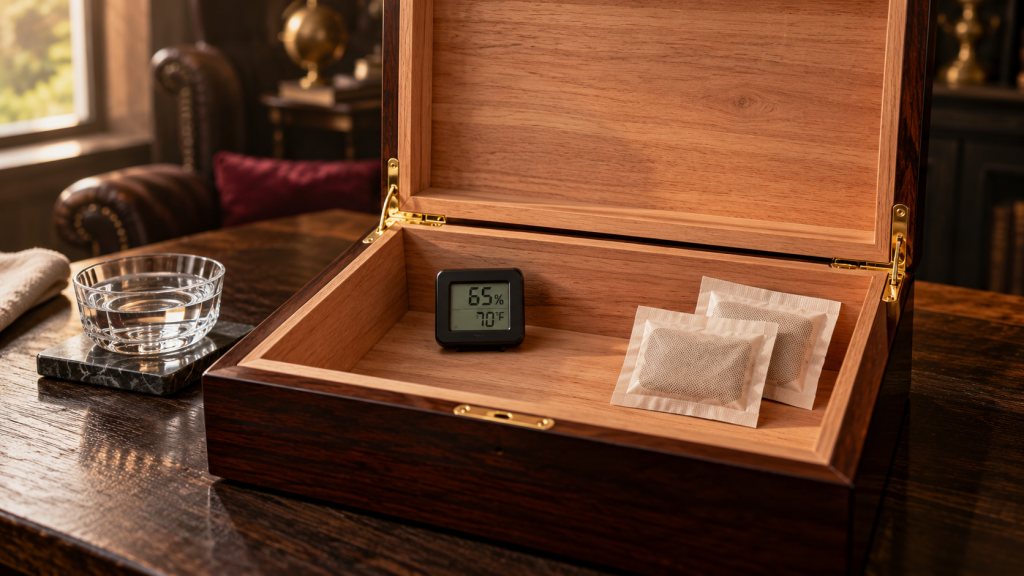
How long should you season a humidor? Most desktop humidors need about 3–5 days with a traditional passive distilled-water method. Purpose-made 84% seasoning packs are generally left in a closed, empty humidor for 14 days. Large cabinets can take longer. The calendar is only a guide: your humidor is ready when a calibrated hygrometer stays in your chosen storage range for 24–48 hours without a major drop.
A new humidor may look finished, but the Spanish cedar inside is usually thirsty. Put cigars into that dry box too soon and the wood can pull moisture from the wrappers you are trying to protect. Seasoning lets the cedar absorb moisture first, creating a stable environment before your collection moves in.
The good news is that seasoning a humidor is not complicated. You need patience, a calibrated hygrometer, and a method that adds moisture gradually. This guide explains how long the process takes, the safest ways to do it, and the signs that tell you the humidor is truly ready.
How Long Does It Take to Season a Humidor?
For most cigar smokers, the practical answer is three days to two weeks. The exact time depends on your seasoning method, the size and construction of the humidor, your climate, and how dry the cedar was when you started.
| Method | Typical Time | Best For |
|---|---|---|
| 84% seasoning packs | 14 days | A controlled, low-mess setup for most desktop humidors |
| Passive distilled-water method | About 3–5 days | Owners who already have a calibrated hygrometer and want a traditional method |
| Cabinet or large humidor | 7–14+ days | Large interiors, multiple shelves, or electronic humidification systems |
Published guidance varies because the methods are different. Holt’s describes a traditional setup that often takes 3–5 days, while Cigars International recommends leaving purpose-made 84% seasoning packs in place for 14 days. Neither number should replace the final test: stable humidity from a calibrated instrument.
Why a New Humidor Must Be Seasoned
Spanish cedar helps buffer changes in humidity and contributes to the familiar aroma of a good humidor. When the cedar is dry, however, it acts like a sponge. It absorbs moisture from the air—and potentially from your cigars—until it reaches equilibrium.
Skipping the seasoning process can lead to:
- Dry, brittle wrappers that crack during cutting or smoking
- Uneven humidity that swings every time the lid opens
- A humidifier that works constantly but never seems to catch up
- Cigars that burn hot or lose some of their aroma and character
If you are new to cigar storage, start with our complete guide to keeping cigars fresh. It explains humidity, temperature, rotation, and long-term care after seasoning is complete.
What You Need Before You Begin
- A calibrated digital hygrometer: Do not trust a brand-new reading until the device has been tested according to its manufacturer’s instructions.
- Your seasoning method: Use purpose-made seasoning packs or a clean dish/sponge with distilled water.
- Distilled water only: Tap and spring water can contain minerals or microorganisms you do not want inside the humidor.
- Your regular humidification device: Prepare it exactly as its manufacturer directs.
- A temporary home for your cigars: A properly sealed food-grade container with suitable humidity control works while the humidor is empty.
Doctor B’s rule: Season the empty humidor first. Do not use your cigars as test instruments.
How to Season a Humidor Step by Step
1. Inspect the Humidor and Its Seal
Remove loose dust with a clean, dry, lint-free cloth. Do not use household cleaners, scented products, or furniture polish. Check that the lid closes evenly. On a desktop humidor, a sheet of paper caught between the lid and box should offer some resistance when gently pulled around the perimeter. It is not a laboratory test, but obvious loose areas can warn you about a poor seal.
2. Calibrate the Hygrometer
A seasoning process is only as trustworthy as the instrument measuring it. Follow the calibration instructions supplied with your digital hygrometer. If it allows adjustment, correct it before placing it in the humidor. If it does not, write down the amount by which it reads high or low and account for that difference.
3. Choose One Seasoning Method
Do not pile several aggressive methods together. More moisture is not the same as better seasoning. Choose a controlled method, close the lid, and let time do the work.
Method A: Seasoning Packs
- Place the manufacturer-recommended number of 84% seasoning packs inside the empty humidor. Use enough for the box’s cigar capacity.
- Leave the packs in their outer wrappers unless the instructions specifically say otherwise. Do not cut or puncture them.
- Close the lid and keep it closed for the full recommended period—commonly 14 days.
- At the end of the seasoning period, remove the 84% packs and install the lower-humidity packs or device you plan to use for normal storage.
- Confirm that the calibrated hygrometer settles into your intended range before adding cigars.
This is the easiest method for many owners because it releases moisture gradually and reduces the temptation to soak the wood.
Method B: Passive Distilled Water
- Place a small clean dish of distilled water—or a clean new sponge dampened with distilled water—inside the empty humidor.
- If you use a sponge, set it on a waterproof barrier so it never touches the wood. It should be damp, not dripping.
- Prepare the regular humidification device according to its directions and place it in the humidor.
- Close the lid for 24 hours before checking. Open it briefly, record the humidity, and close it again.
- Continue for roughly 3–5 days, checking only as needed. Add distilled water to the dish or sponge if it dries out.
- When humidity remains stable for 24–48 hours, remove the open water source and let the permanent humidification device maintain the box.
Some traditional instructions call for wiping the cedar directly with distilled water. That can work, but too much water can raise the grain, stain the lining, or encourage warping. A passive water source is slower and gentler, which is why we prefer it for most cigar owners.
4. Verify That the Humidor Is Ready
The humidor is ready when all of these statements are true:
- The hygrometer has been calibrated.
- The reading remains stable in your chosen storage range for at least 24–48 hours.
- There are no damp spots, standing water, swollen seams, or musty odors.
- The regular humidification system—not an open dish of water—is installed and working.
Many cigar smokers prefer something between the mid-60s and low-70s relative humidity. There is no magical number that suits every cigar, climate, or personal taste. Consistency matters more than chasing a perfect reading every hour.
5. Add Cigars and Monitor the First Week
Add your cigars after the seasoning source has been removed and normal humidification is in place. The reading may dip temporarily because you opened the lid and introduced cigars from another environment. Give the system time to settle.
For the first week, check the hygrometer once or twice a day. Avoid reacting to every one-point change. If humidity continues falling for several days, confirm the seal, the hygrometer calibration, and the capacity of your humidification device before repeating the entire seasoning process.
Common Humidor-Seasoning Mistakes
Using Tap Water
Tap water varies by location and may leave minerals behind. Distilled water is inexpensive and removes an avoidable variable.
Soaking the Cedar
The goal is to condition the wood, not saturate it. Visible puddles or dripping surfaces mean you have gone too far. Remove the water, dry any standing moisture with a clean cloth, and allow the humidor to stabilize.
Trusting an Uncalibrated Hygrometer
An inaccurate reading can make a properly seasoned humidor look dry—or persuade you to add dangerous amounts of moisture. Calibration comes before seasoning.
Opening the Lid Repeatedly
Every peek exchanges the controlled air inside for room air. Check sparingly. Seasoning is mostly a waiting game.
Adding Cigars Too Early
If the cedar is still dry, your cigars become part of the humidification process. Keep them in temporary controlled storage until the box is stable.
Leaving 84% Packs in for Normal Storage
High-humidity seasoning packs are intended to prepare an empty humidor. Replace them with the humidity level recommended for regular cigar storage after the seasoning period.
How Climate and Humidor Size Change the Timeline
A small desktop humidor in a moderately humid room will usually stabilize faster than a tall cabinet in a heated winter home. Dry climates, air conditioning, and forced-air heat increase the moisture difference between the room and the humidor. Large shelves and dividers also create more cedar surface area to condition.
For a cabinet humidor, follow the manufacturer’s startup instructions for the electronic humidifier. Place calibrated sensors on more than one level, allow air to circulate, and wait until readings are consistent from top to bottom. A large cabinet can easily need a week or two—or longer—before it is ready for a valuable collection.
If you are shopping for a larger setup, see our guide to choosing the right freestanding humidor.
When Should You Re-Season a Humidor?
A humidor that remains in regular use usually does not need a full re-seasoning. Its cedar stays conditioned by the normal humidification system. Consider re-seasoning when:
- The humidor has been empty and unhumidified for several months
- It was stored open in a very dry environment
- Humidity falls steadily after you have ruled out a faulty gauge, weak humidifier, and poor seal
- You cleaned it after a serious storage problem and allowed it to dry completely
Do not automatically re-season every time the reading dips. Frequent over-correction can create more trouble than a short, modest humidity change.
Frequently Asked Questions
Can I season a humidor in 24 hours?
Usually not well. The air may reach a high reading quickly while the cedar is still absorbing moisture. Give the wood time to stabilize and use 24–48 hours of steady readings as your final check.
How long should Boveda-style seasoning packs stay in a humidor?
Purpose-made 84% seasoning packs are commonly used for 14 days in an empty wooden humidor. Follow the instructions for your specific product and use the correct number of packs for the humidor’s capacity.
Should I wipe the inside of a humidor with distilled water?
We generally prefer a passive water source or controlled seasoning packs. Wiping can add moisture quickly, but oversaturation may raise the grain, discolor the wood, or contribute to warping. If the humidor manufacturer gives specific instructions, follow them.
What humidity means a humidor is ready?
It is ready when a calibrated hygrometer stays within your intended normal storage range for 24–48 hours after the seasoning source is removed and the regular humidification system is running. Many smokers keep cigars somewhere from the mid-60s to low-70s RH.
Can cigars stay inside while I season the humidor?
No. Keep the humidor empty during seasoning. Store cigars temporarily in a sealed, food-grade container with appropriate humidity control.
Does a used humidor need to be seasoned?
If it has remained humidified and stable, probably not. If it has been empty, open, or dry for months, treat it like a new humidor and condition it gradually.
How long does a cabinet humidor take to season?
Plan on at least a week and often two weeks or more. Follow the cabinet and humidifier manufacturers’ instructions, use sensors on multiple levels, and wait for stable readings throughout the interior.
The Bottom Line
Most traditional desktop-humidor methods take about 3–5 days, while controlled 84% seasoning packs generally take 14 days. A large cabinet can take longer. But the real finish line is not a date—it is a stable, calibrated humidity reading with no signs of excess moisture.
Take the extra time now and your cigars will reward you later. Once the humidor is stable, continue with our complete cigar-storage guide, explore more advice in Storage and Humidors, or learn the best way to smoke a cigar from preparation to finish.
Sources and further reading: Holt’s: How to Season & Set Up a Humidor; Cigars International: How to Season a Humidor.
Cigars & Stogies is intended for adults of legal tobacco-purchasing age. Tobacco products carry health risks. This article is for storage education and does not encourage tobacco use.