
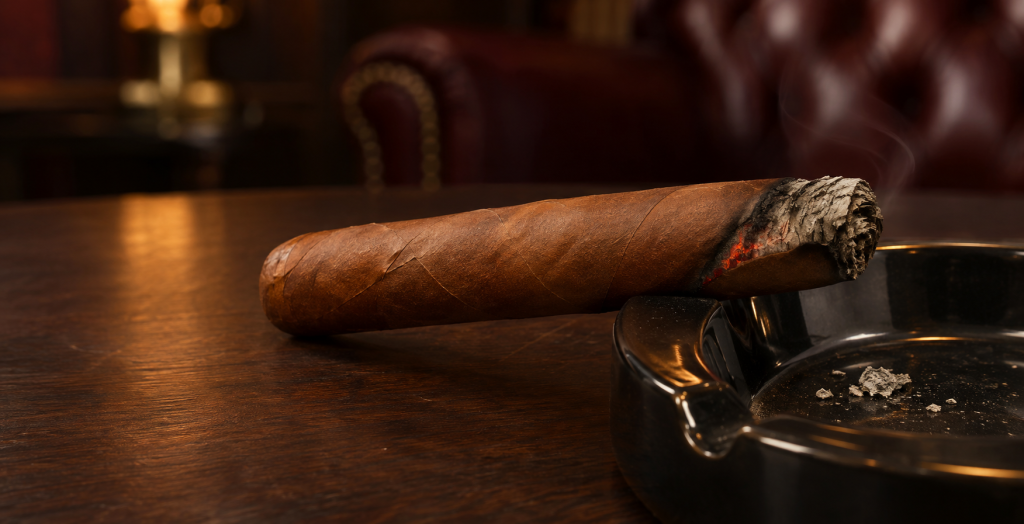
You light a good cigar, settle into the chair, and everything seems right. Then ten minutes later one side of the burn line is racing ahead while the other side barely moves. The cigar begins to look like a hollowed-out canoe—a classic case of cigar canoeing.
That uneven burn is frustrating, but it does not automatically mean the cigar is ruined. Most mild cases can be corrected with patience, a small touch of flame, and a change in how or where you are smoking.
After more than twenty years of enjoying cigars, I have learned that the biggest mistake is trying to fix a crooked burn too aggressively. A torch can solve a small problem and create a much bigger one in a few seconds. The better approach is to diagnose the cause first, give the cigar a chance to correct itself, and use the least amount of flame necessary.
This guide explains what cigar canoeing is, how it differs from tunneling and other burn problems, how to fix it during a smoke, and how to reduce the chances of it happening again.
Quick answer: If one side of the cigar is burning faster, slow your smoking pace, move out of the wind, and place the slower-burning side down for about 30 to 60 seconds. If the burn does not begin to level out, briefly touch the flame to the unburned edge—without blasting the entire foot.
What Is Cigar Canoeing?
Canoeing happens when one side of a cigar burns noticeably faster than the other. The faster side travels down the cigar while the slower side leaves a strip or “bank” of unburned wrapper behind. From the side, the shape resembles a canoe.
A slightly wavy burn line is normal. Premium cigars are handmade from natural leaves, and the burn will not always look like it was drawn with a ruler. I usually leave a small wave alone because many cigars correct themselves within a half inch.
It becomes a true canoe when the gap keeps growing, the wrapper on one side remains unburned, or the uneven combustion begins changing the draw and flavor.
Canoeing vs. Tunneling, Runs, and a Tight Draw
Before you reach for the lighter, identify the actual problem. Different burn problems need different corrections.
| Burn problem | What you see | Likely issue | First response |
|---|---|---|---|
| Canoeing | One side burns ahead of the other | Uneven light, wind, moisture imbalance, or construction | Slow down, remove the draft, rotate, then touch up the slow edge |
| Tunneling | The filler burns inside while the wrapper and binder lag behind | Wrapper is too moist, smoking cadence, or combustion imbalance | Let the cigar rest; relight the full edge carefully if needed |
| Runner | A narrow channel races down one section | A vein, air pocket, or localized construction issue | Touch up early before the channel gets longer |
| Tight draw | Very little smoke and strong resistance | Over-humidification, a plug, or a cut that is too small | Check the cut and storage; do not keep heating the foot |
The distinction matters. If a cigar is tunneling, repeatedly torching the outside can make the wrapper bitter without fixing the hot center. If the draw is plugged, adding more heat only makes the smoke harsher.
Why Does a Cigar Canoe?
1. The Foot Was Lit Unevenly
The most common cause is a rushed light. If only one part of the foot develops a solid ember, that area gets a head start and continues burning faster.
I prefer to toast the foot slowly while rotating the cigar. Keep the flame just off the tobacco and watch the entire edge darken. Once the foot is evenly toasted, take a few gentle puffs while continuing to rotate it. The goal is an even glow, not a bonfire.
2. Wind or a Nearby Draft Is Feeding One Side
Patio breezes, ceiling fans, air-conditioning vents, open car windows, and even the direction you hold the cigar can feed oxygen to one side of the ember. This is especially common on the golf course or at the beach.
If the same side keeps racing ahead, move out of the airflow before you add more flame. Otherwise, you may correct the burn only to have the draft create the same problem again.
3. The Cigar Has Uneven Moisture
Tobacco that is too wet tends to burn reluctantly. If one side of the cigar absorbed more moisture than the other, the drier section may move ahead.
This can happen when cigars sit against a humidification device, when a humidor has poor air circulation, or when a newly delivered cigar has not had time to settle. Stable storage is more important than chasing one perfect humidity number. Many experienced smokers prefer cigars in the mid-to-upper 60% relative-humidity range because they often draw and burn more reliably there.
If several cigars from the same humidor feel soft, smoke reluctantly, or repeatedly tunnel and canoe, review your hygrometer and storage setup before blaming every cigar. The site’s complete guide to storing cigars is the best next step here.
4. You Are Smoking Too Fast
Frequent, hard puffs raise the temperature of the ember. Hot combustion can make a small burn difference grow quickly and can turn a pleasant cigar sharp or bitter.
There is no stopwatch rule that fits every cigar, but a relaxed puff about every 30 to 60 seconds is a useful starting point. If the cigar feels hot near the band or the flavor suddenly becomes harsh, set it down for a minute. A premium cigar should be enjoyed, not chased.
5. The Bunch or Wrapper Is Uneven
Some burn problems come from construction. Premium cigars are handmade, and a section with more densely packed tobacco, an air pocket, a thick vein, or an uneven wrapper can change the rate of combustion.
If the same canoe returns soon after every correction, the issue may be inside the cigar. At that point, stop fighting it with the torch. A badly constructed cigar can still be smoked, but constant touch-ups may do more damage to the flavor than the crooked burn itself.
6. The Wrapper Was Damaged
A crack, torn edge, or lifted seam changes how air moves around the cigar. Damage may come from dry storage, an overly deep cut, rough handling, or removing a band before the adhesive has warmed.
Minor wrapper damage can sometimes be repaired with cigar pectin, but that is a different job from correcting canoeing. If the wrapper is split, fix or stabilize the damage first.
How to Fix a Canoeing Cigar Step by Step
Step 1: Do Not Correct Every Small Wave
Watch the burn for a few minutes. If the difference is less than about a quarter inch and is not getting worse, give the cigar time to catch up.
Step 2: Slow Down and Remove the Wind
Set the cigar down briefly. Move away from the fan, vent, or direct breeze. A cooler ember often becomes more manageable on its own.
Step 3: Rotate the Slower Side Down
Place the unburned or slower side toward the bottom for 30 to 60 seconds. This passive correction may be enough for a developing canoe. If an outdoor breeze caused the problem, adjust the cigar so the slower side receives the helpful airflow rather than letting the faster side keep racing.
Step 4: Touch Up Only the Unburned Edge
If the burn is still falling behind, use a soft flame or a low, controlled torch. Hold the flame near the slow section without burying it in the tobacco. Apply heat for a second or two, rotate slightly, and stop as soon as the wrapper catches.
Do not roast the entire foot unless you are performing a complete relight. Overcorrecting creates excess heat, scorches the wrapper, and can make the next several draws bitter.
Step 5: Take One or Two Gentle Puffs
Once the edge is glowing, take a slow puff or two. Then leave it alone and see whether the burn line settles. Repeated hard draws immediately after a touch-up can restart the problem.
Step 6: Know When to Stop Fighting
If the canoe returns within an inch, the cigar may have a construction or moisture problem that cannot be fully corrected during the smoke. You can continue with occasional light touch-ups, perform a careful relight, or set the cigar aside. There is no prize for turning a relaxing smoke into a wrestling match.
Should You Wet the Fast-Burning Side?
Some smokers dab water, saliva, or a drink onto the fast side to slow it down. I do not recommend it. Introducing liquid to the wrapper can stain it, alter the flavor, soften the leaf unevenly, or create a new burn problem.
Use airflow, patience, and a precise touch-up instead. They are easier to control and do not add anything foreign to the tobacco.
How to Prevent Cigar Canoeing
Give Delivered Cigars Time to Rest
Cigars can experience temperature and humidity changes during shipping. Letting a new order rest in stable storage for at least several days—and longer after rough weather—can improve the draw and burn.
Keep Humidity Stable
Use a calibrated digital hygrometer and avoid placing cigars directly against the humidifier. Rotate boxes or trays occasionally if your humidor has uneven zones. Stability matters more than constantly changing the setup to chase a single reading.
Toast the Entire Foot
Take your time at the beginning. Rotate the cigar, heat the edge evenly, and confirm that the foot has a consistent glow before settling into the smoke.
Protect the Ember From Wind
Choose a sheltered seat outdoors. On the golf course, keep the cigar out of direct wind between shots. A good wind-resistant lighter helps with ignition, but it cannot prevent a draft from affecting the ember after the cigar is lit.
Keep a Relaxed Cadence
Slow, deliberate puffs keep the cigar cooler and allow the tobacco to burn at a natural pace. If the cigar starts feeling hot, give it a rest.
Inspect the Cigar Before Lighting
Look for cracks, hard spots, soft spots, or a visibly uneven foot. Gently roll the cigar between your fingers without squeezing. A little variation is normal; a severe plug or hollow section warns you that burn corrections may be necessary.
Frequently Asked Questions About Cigar Canoeing
Can a canoeing cigar fix itself?
Yes. A mild uneven burn often corrects itself within a half inch, especially after you slow down, rotate the cigar, or move out of a draft. Correct it only when the gap continues growing.
Is cigar canoeing caused by high humidity?
It can be. Over-humidified or unevenly humidified tobacco burns reluctantly and may canoe or tunnel. However, an uneven light, wind, smoking too quickly, and construction can cause the same symptom.
Which side should face down when a cigar is canoeing?
Start by placing the slower-burning, more unburned side down for 30 to 60 seconds. If wind is involved, position the cigar so the slower side gets the corrective airflow. Watch the burn rather than following a rigid rule in every environment.
Can I still smoke a canoeing cigar?
Usually, yes. Canoeing is a combustion problem, not an automatic reason to discard the cigar. Correct it gently and pay attention to whether the draw or flavor changes.
Why does the canoe return after I fix it?
Recurring canoeing often points to an ongoing draft, uneven moisture, a dense section in the bunch, or another construction issue. If it returns quickly, reduce the amount of flame you use and decide whether the cigar is still enjoyable.
Is tunneling the same as canoeing?
No. Canoeing travels down one side. Tunneling occurs when the filler burns ahead inside while the outer wrapper and binder lag behind. Tunneling usually calls for rest and a more complete correction, not a quick flame on one edge.
Final Thoughts From Doctor B
Cigar canoeing is annoying, but it is usually manageable. Start with the simple things: slow down, get out of the wind, rotate the cigar, and give the burn a chance to settle. When you need the lighter, touch up only the section that is behind.
The larger lesson is that burn quality starts before the cigar is lit. Stable storage, a patient toast, a clean cut, and a relaxed cadence prevent more problems than any mid-smoke repair trick.
If you are building those fundamentals, continue with the Cigars & Stogies beginner guides on storing, cutting, lighting, and enjoying a premium cigar. The goal is not a picture-perfect ash every time. It is a cooler, cleaner, more rewarding smoke.
For adults 21 and older. Premium cigars contain tobacco and nicotine and are not risk-free.